VICTOR OLUBIYI
National Institute for Health and Care Research (NIHR), United Kingdom
Fully funded – NIHR Insight Studentship
Master’s Degree – Personalized Medicine / Translational Research
Background: Medical Laboratory Science, Ladoke Akintola University of Technology, Nigeria (2020)

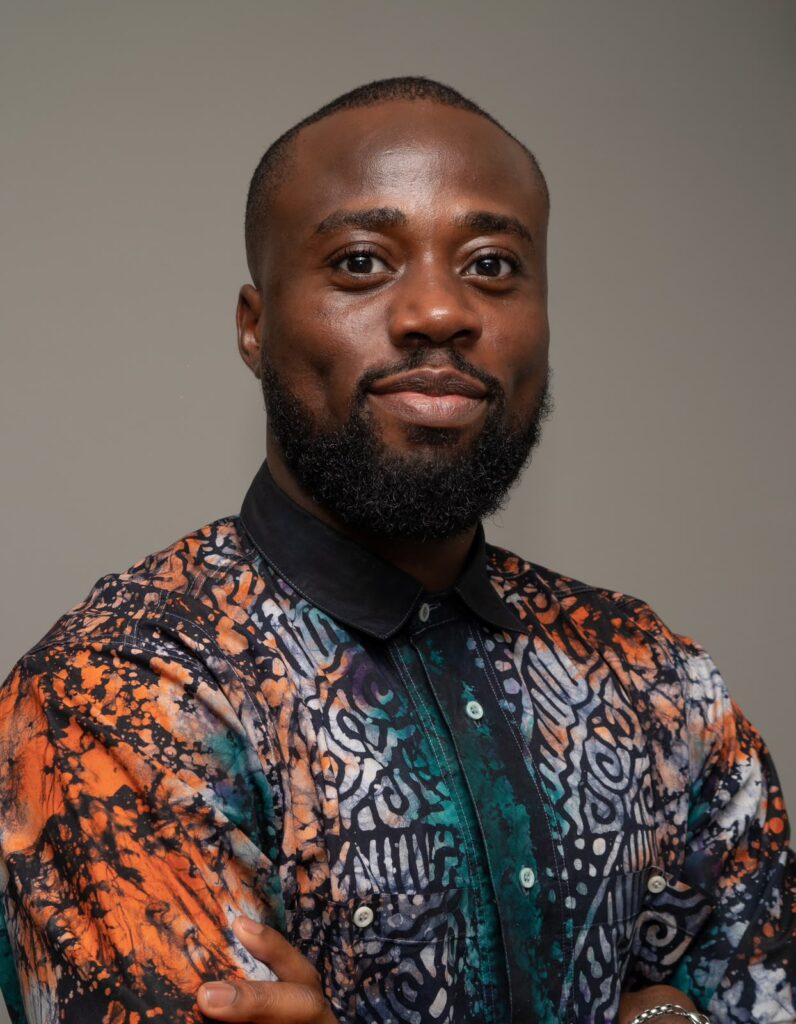
Victor Olubiyi is a biomedical scientist whose scholarship journey took root in frustration with the gap he observed between frontline laboratory practice in Nigeria and the pace of advances in medical research elsewhere. After completing his degree in Medical Laboratory Science at Ladoke Akintola University of Technology in 2020, he worked as a biomedical scientist while quietly building the case for a career in research. He applied widely and was turned down repeatedly, including scholarships in the UK, the US and Germany’s DAAD Programme, and a fully funded place in Ireland that came with strong feedback but no funding. Rather than retreat, he treated every rejection as feedback: sharpening his CV, building data-science skills, and narrowing his focus onto a single, clearly defined research problem. That persistence led him to the NIHR Insight Studentship, which fully funded his master’s degree in the UK and set him on a path toward personalized medicine and translational research-work focused on moving scientific evidence out of the lab and into real clinical practice.
Not through a job-board-style advertisement. Victor had already learned that many of the best-funded opportunities; including those from industry and research bodies like the NIHR are never widely publicized; he had to search directly on institutional and NHS-affiliated websites. Before applying, he also attended a conference the NIHR organized, where he spoke directly to the organizer about his circumstances. He was candid that she told him he “wasn’t an ideal candidate” given his background, but encouraged him to apply anyway, and he wove everything he learned at that conference into his application.
Full funding for his master’s degree, awarded through the NIHR Insight Studentship, a Programme aimed at supporting students, including those from underrepresented backgrounds, into health and care research careers.
Victor described the emotional weight of finally getting “yes” after years of rejection, including an earlier partial (50%) scholarship offer from the University of Nottingham that, while not enough on its own, reassured him he was on the right track. He also pointed to the depth of thought his application demanded: he had to confront direct questions about whether he was personally “underserved or underrepresented” in research, and to connect his identity as a Black researcher to the broader, documented gap in Black representation in STEM and clinical research, and to make the case for why funding him would help close that gap.
Define the problem you want to solve before you apply, and don’t spread yourself across too many unrelated applications: two or three well-targeted applications, told powerfully, beat a scattershot approach. Research the funder’s values and align your story to them. Root your application in data and real evidence, not generic claims (“over 10,000 people die annually from smoking complications” lands harder than “smoking kills”). Use AI responsibly: free-write your own story first, rough and unedited, and only bring in AI afterward to refine it because everyone leaning on AI from the start ends up submitting the same generic answers. Ask people outside your field to read your application and flag what doesn’t make sense to a layperson. And expect rejection along the way: “You will get a lot of rejections, but all you need is one yes. That one yes is enough to change everything.”
.